
7 Safe Electric Car Driving Tips in Bali for Tourists and Expats

Bali Premium Trip Editorial Desk
July 17, 2026
10 min read
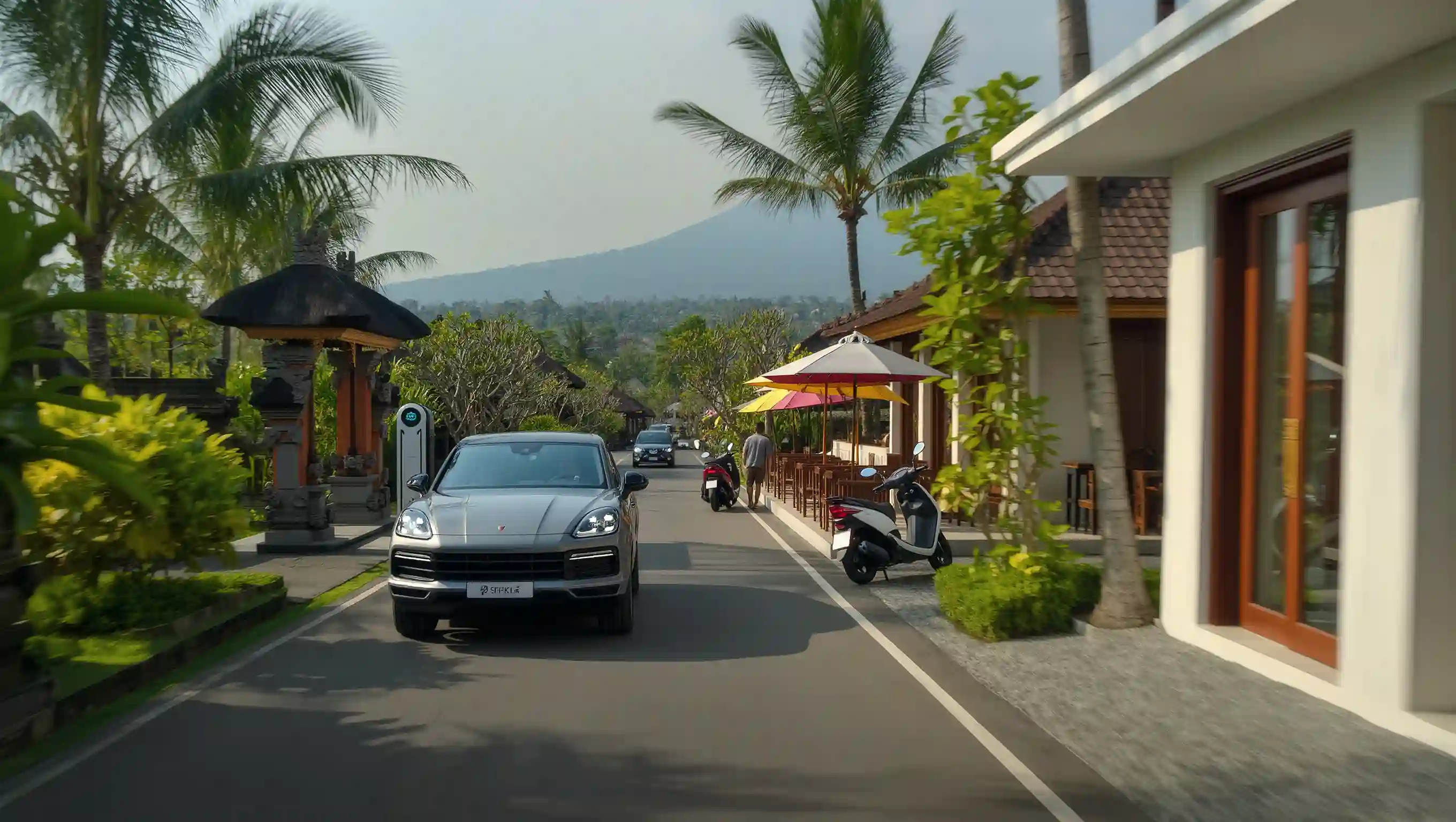
Driving an electric vehicle (EV) in Bali is actually much easier than many tourists expect, as long as you understand three key things: your battery range, the location of the nearest EV charging station, and the unique characteristics of Bali’s narrow, often congested roads. Electric cars are generally best suited for short-distance travel around popular tourist areas such as Canggu, Ubud, Seminyak, and Uluwatu.
This guide covers everything you need to know about driving an electric car safely in Bali, including operating costs, vehicle performance, charging infrastructure, and when choosing an EV is a better option than renting a gasoline-powered car.
Key Takeaways
- Bali’s roads, which are often narrow and congested, are well-suited for electric vehicles because regenerative braking improves battery efficiency and provides smoother control during stop-and-go traffic.
- Electric vehicles are ideal for short-distance travel around popular tourist areas such as Canggu, Ubud, Seminyak, and Uluwatu, while gasoline-powered cars are better suited for longer trips to destinations with limited EV charging stations, such as Kintamani and Karangasem.
- Using Eco or Normal driving mode, along with a 360-degree camera and parking sensors, makes it easier and safer to maneuver through narrow lanes and busy streets.
- Drivers should accelerate smoothly and pay attention to the vehicle’s dimensions, as electric motors deliver instant torque and most EVs have a wider body than conventional cars.
- Proper battery management is essential, including monitoring the battery level, using the air conditioning efficiently, and planning your route with backup charging stations in mind. For a hassle-free experience, rent an electric vehicle from Bali Premium Trip, which offers premium EVs and professional drivers familiar with Bali’s roads and charging infrastructure.
What Should You Know Before Driving an Electric Car in Bali?
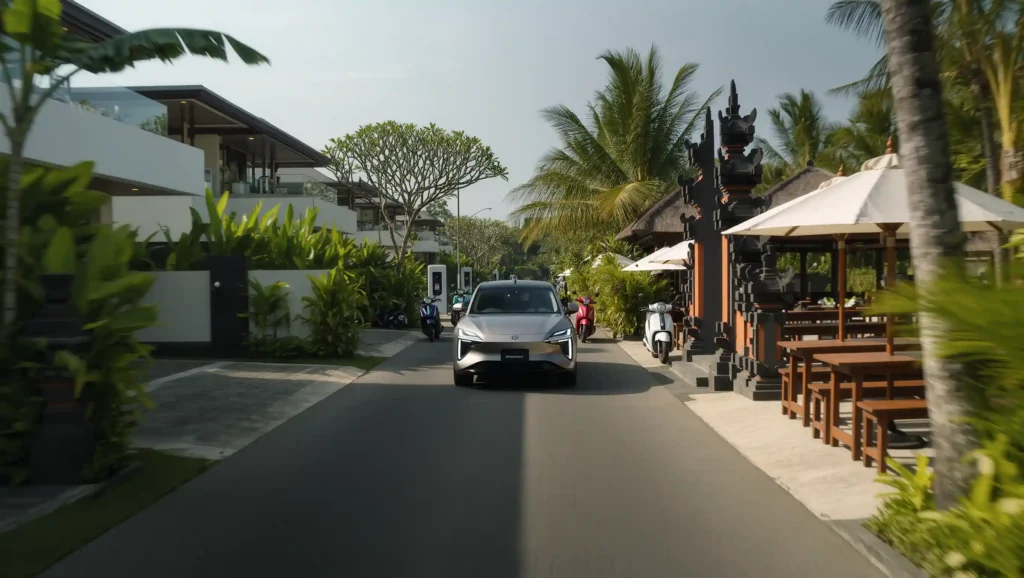
The first thing to understand is that Bali’s road conditions are very different from highways or major intercity roads. Many roads across the island are narrow, winding, and heavily congested, especially in popular destinations such as Canggu, Kuta, and Ubud during peak hours.
Interestingly, these conditions actually play to the strengths of electric vehicles. Thanks to regenerative braking, EVs recover energy whenever the vehicle slows down or brakes, making them highly efficient in stop-and-go traffic. As a result, battery consumption is often better than many first-time EV drivers expect.
Most tourists renting an electric car in Bali also tend to follow relatively short daily itineraries. A typical day might involve driving from Seminyak to Ubud before returning to the hotel or villa in the evening. These shorter travel distances are well within the driving range of most modern electric vehicles.
Another important factor to consider is Bali’s unique driving environment. Drivers frequently need to stop unexpectedly due to pedestrians crossing the road, traditional ceremonies, delivery vehicles, or motorcycles overtaking from multiple directions.
In these situations, electric vehicles often provide a smoother driving experience than gasoline-powered cars. Their regenerative braking system offers more gradual deceleration, reducing the need for constant brake pedal use during slow-moving traffic. While first-time EV drivers may need a brief adjustment period on their first day, many eventually find electric cars easier and more comfortable to drive on Bali’s unpredictable roads.
When Should You Choose an Electric Vehicle Instead of a Gasoline Car in Bali?
An electric vehicle is the ideal choice for city-based itineraries covering short to medium distances, such as traveling between Seminyak, Ubud, and Canggu in a single day. The EV charging network (SPKLU) across Bali’s main tourist areas is now sufficient to support this type of travel, making the risk of running out of battery relatively low as long as drivers plan their charging stops in advance. Bali’s congested roads and frequent stop-and-go traffic also allow regenerative braking to perform at its best, improving battery efficiency compared to driving at a constant speed on highways.
From a cost perspective, electric vehicles are generally more economical for daily travel around tourist destinations because charging at public EV charging stations costs less than purchasing fuel for the same driving distance. Maintenance costs are also typically lower since EVs do not require oil changes and have fewer mechanical components subject to wear and tear. These advantages make electric vehicles a cost-effective option for tourists and expatriates renting a vehicle for several days or even weeks while traveling around Kuta, Seminyak, Canggu, and Ubud.
Gasoline-powered cars remain the better option for long-distance trips to areas with limited charging infrastructure, such as Kintamani, Amed, or remote parts of Karangasem. They are also more practical for itineraries with multiple stops in regions where EV charging stations are scarce, as refueling can be done at virtually any gas station without first checking charger availability. For everyday travel around Bali’s most popular tourist destinations, however, electric vehicles offer a quieter, more efficient, and more relaxing driving experience, while gasoline cars continue to have the advantage for longer routes and areas where public charging stations are not yet widely available.
7 Safe Electric Vehicle Driving Tips in Bali
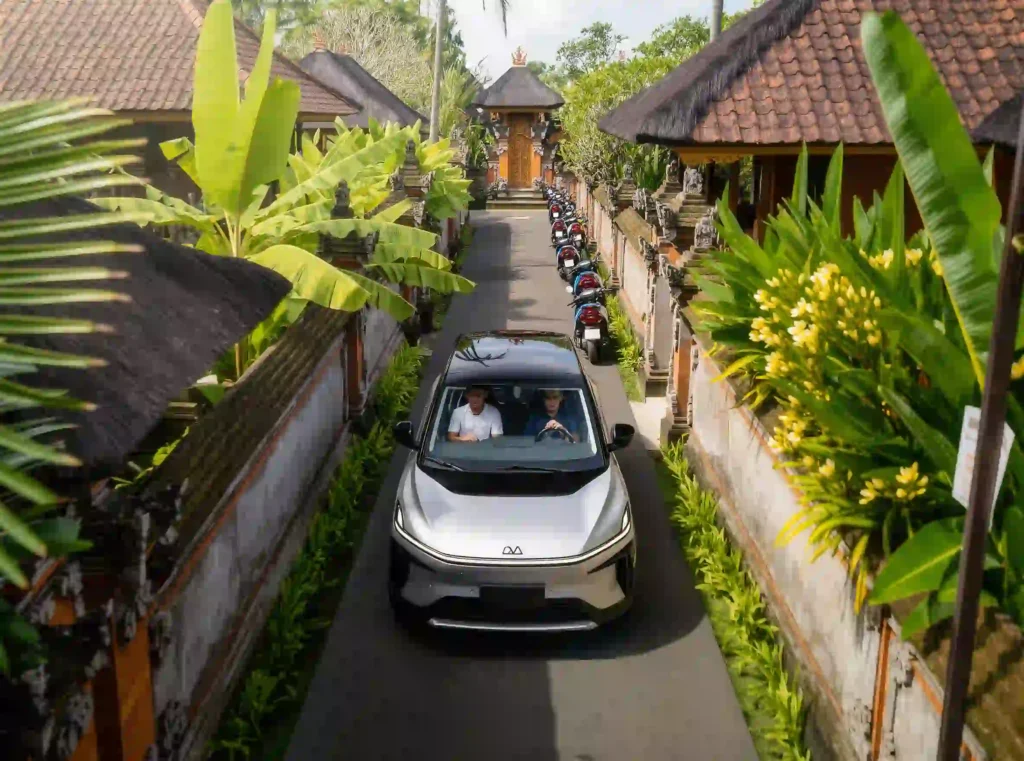
Safe EV driving in Bali’s traffic and narrow roads mainly means taking advantage of the way electric cars are easy to control at low speeds. The small alleys around Seminyak or Ubud require precise maneuvering. Here is a deeper explanation of each tip:
The key to driving an electric vehicle safely in Bali, especially on congested roads and narrow streets, is to take advantage of an EV’s smooth low-speed handling. The narrow lanes commonly found in areas like Seminyak and Ubud require precise maneuvering. Below is a more detailed explanation of each safety tip.
1. Use Eco or Normal Mode for Smoother Control
Your selected driving mode determines how quickly the vehicle responds to accelerator input. Sport mode delivers power almost instantly when the accelerator is pressed, making it suitable for open highways but less appropriate for Bali’s narrow streets in areas such as Ubud or Seminyak, where there is very little room for error.
Eco or Normal mode reduces accelerator sensitivity, allowing the vehicle to accelerate more gradually. This gives drivers extra time to react to motorcycles weaving through traffic or pedestrians suddenly emerging from narrow alleys. For stop-and-go traffic, these modes also minimize sudden acceleration, making the ride more comfortable for passengers.
2. Make Full Use of the 360-Degree Camera and Parking Sensors
Many access roads leading to villas, restaurants, and homestays in Bali were built long before modern vehicles became larger, leaving only limited space for cars. A 360-degree camera provides a complete view of the area surrounding the vehicle, including blind spots that mirrors cannot capture, such as fence corners or low walls along narrow roads.
Parking sensors complement the camera by providing audible and visual distance warnings. Together, they are especially useful when navigating lanes lined with parked motorcycles, potted plants, or utility poles that often protrude into the roadway. Always activate the 360-degree camera and parking sensors whenever entering roads narrower than approximately three meters. Avoid relying solely on instinct, particularly when driving larger electric SUVs.
3. Maintain a Steady Speed and Avoid Sudden Acceleration
Electric motors deliver maximum torque from the moment they begin rotating, unlike gasoline engines that require higher RPMs to reach peak power. As a result, pressing the accelerator too aggressively can cause the vehicle to surge forward more quickly than expected, which can be risky in confined spaces.
The best approach is to apply smooth, consistent pressure to the accelerator rather than making abrupt inputs. This technique keeps the vehicle under precise control instead of reacting to the instant torque characteristic of electric motors. It also creates a more comfortable ride for passengers, especially those seated in the rear.
4. Be Aware of Your Vehicle’s Dimensions When Entering Narrow Lanes
Not every road in Bali was designed for car traffic, especially electric vehicles, which often have wider bodies due to their battery packs. In areas such as Canggu, many lanes are only wide enough for a single vehicle, with walls or fences on both sides leaving very little clearance.
Before entering a narrow road, estimate your vehicle’s width relative to the available space. Fold the side mirrors if necessary to gain a few extra centimeters of clearance. When encountering oncoming motorcycles or other vehicles, give priority to the vehicle that would have greater difficulty reversing typically the one that has already traveled farther into the lane.
5. Monitor Your Battery Level Regularly During Traffic Congestion
Electric vehicles are generally more energy-efficient in traffic than gasoline cars because they consume virtually no energy while stationary. However, systems such as the air conditioner, infotainment display, and lighting continue drawing power from the battery.
Heavy traffic in areas like Kuta or Denpasar during rush hour can reduce your estimated driving range faster than expected. Check the battery indicator every few minutes instead of only before starting your journey. A battery level of around 30% is a sensible point to become cautious. Once it falls below that level, begin considering the nearest public EV charging station rather than continuing with your original travel plan.
6. Reduce Air Conditioner Usage When the Battery Starts Running Low
The air conditioner is one of the largest power consumers after the electric motor itself, and Bali’s tropical climate often requires it to run at low temperatures with high fan speeds. Once the battery level drops below 20%, continuous heavy AC usage can significantly reduce your remaining driving range.
Increasing the AC temperature by one or two degrees or lowering the fan speed can help extend your range without noticeably reducing comfort. For shorter trips, occasionally opening the windows can also provide adequate ventilation, particularly on roads with light traffic. As a practical guideline, when your battery reaches 20%, raise the AC temperature slightly and switch off optional features such as heated seats if your vehicle is equipped with them.
7. Always Plan a Backup Route and Charging Station
Bali’s public EV charging network is still developing and is not evenly distributed across the island. Popular tourist destinations such as Kuta, Seminyak, and Sanur have relatively good charging coverage, while more remote areas like Karangasem and Bangli still have limited charging infrastructure.
Before traveling to unfamiliar destinations, check charging station locations using the PLN Mobile app or Google Maps. Identify at least two charging stations along your route rather than relying on just one, in case your primary charging location is occupied or temporarily unavailable. Planning ahead helps prevent critical battery situations, especially when driving through heavy traffic or remote areas without convenient access to charging facilities.
Read More: How Much Is Electric Car Rental in Bali? 2026 Price Update
Renting an electric car safely and comfortably with Bali Premium Trip
Driving an electric car in Bali is not about complicated technology, but about understanding local traffic patterns and typical travel routes on the island. By taking advantage of the EV’s smooth performance, efficiency in traffic, and easy low‑speed control, travelers and expats can enjoy a more comfortable driving experience than with conventional cars.
If you want to enjoy this convenience without worrying about charging logistics or route planning, Bali Premium Trip offers electric car rental services tailored to travel needs. From premium EV units to experienced drivers who understand road conditions and charging locations across Bali, everything is designed to keep your journey safe, efficient, and premium throughout your stay. Contact our team today to book your electric car rental in Bali and enjoy a practical, eco-friendly, and premium driving experience throughout your holiday.

Related Article

Bali International Airshow 2026: A Complete Guide & Facts About the 2027 Schedule
As both a tourist destination and a hub for international...
As both a tourist destination and a hub for international business gatherings, Bali often hosts large-scale exhibitions, one of them...
Bali Island Hopping by Private Boat: Premium Day-Trip Routes Compared
Island hopping from Bali runs east. Nusa Penida and Nusa...
Island hopping from Bali runs east. Nusa Penida and Nusa Lembongan fill a full day with manta rays, cliffs and...

Bali Surf Charter by Boat: The Reef Breaks You Can Only Reach by Boat
A Bali surf charter is a private crewed boat that...
A Bali surf charter is a private crewed boat that takes you to reef breaks with no road access. That...