How Physical Traffic Clearance Works: A Complete Guide for VIP Travel in Bali

Bali Premium Trip Editorial Desk
August 24, 2026
9 min read
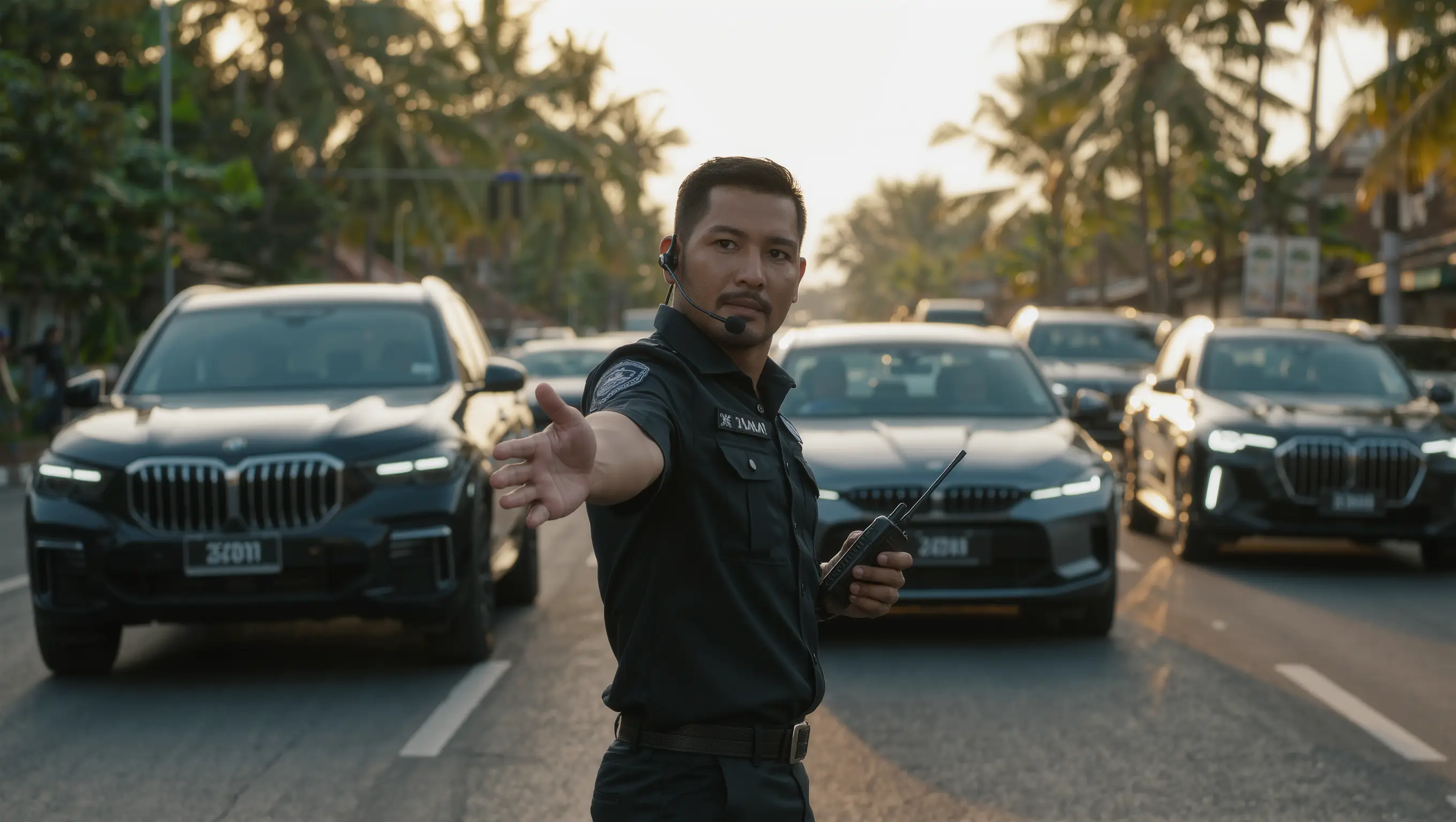
For many people, the term physical traffic clearance still sounds unfamiliar, yet this service is increasingly used by VIP guests, business travelers, and organizers of large events who want to make sure their ground travel in Bali runs without a hitch. Congestion in busy areas like Kuta, Seminyak, or Canggu during certain hours can seriously throw off a schedule, especially when every minute genuinely matters for a tightly planned agenda.
Physical traffic clearance exists as a solution for exactly this kind of situation, making sure a client’s vehicle can move more smoothly through direct on-the-ground coordination. This article covers how this service actually works, why it matters, and tips for choosing the right physical traffic clearance provider in Bali.
Key Takeaways
- Physical traffic clearance is an on-the-ground traffic management service that helps a client’s vehicle move more smoothly through congestion-prone points.
- This service involves coordination between a field team, the driver, and sometimes local authorities, depending on the scale and needs of the trip.
- Physical traffic clearance is most needed for tightly scheduled trips, large groups, or visits by important figures who need reliable travel time.
- This service works differently from simply hiring an experienced driver, since it involves route planning and a supporting team stationed at key points.
- Bali Premium Trip offers physical traffic clearance integrated with private car transfer and security accompaniment, so your ground travel in Bali can run more efficiently and stay on a reliable schedule.
Why Physical Traffic Clearance and Traffic Management Matter in Bali

Bali’s road infrastructure hasn’t fully kept pace with the growing number of vehicles, especially in major tourist areas. During peak hours, a trip that should only take twenty minutes can stretch to well over an hour, particularly if there’s a major event, a traditional ceremony, or ongoing road repairs.
For VIP guests, business travelers with a packed schedule, or event organizers who need to make sure important guests arrive on time, this kind of unpredictability can become a serious problem. Physical traffic clearance helps reduce that risk by ensuring there’s direct coordination on the ground, so a client’s vehicle can move through congestion-prone points more smoothly, without compromising safety or breaking any applicable traffic laws.
How Does Physical Traffic Clearance Work?
In simple terms, physical traffic clearance works through a combination of route planning, on-the-ground team coordination, and real-time communication between the driver and the supporting team. Before the trip begins, the team typically conducts a route survey to identify potentially congested points, such as major intersections, areas near markets, or zones frequently affected by traditional ceremony processions.
During the trip itself, personnel stationed on the ground help manage vehicle flow at those critical points, signal other road users, or coordinate with local officers when necessary, so the client’s vehicle can keep moving without lengthy stops. The entire process is carried out while still complying with applicable traffic laws, rather than forcing a path through or disregarding the safety of other road users, which is what sets this service apart from simply driving aggressively to dodge traffic.
Read more: Bodyguard for VIP Female Guests: Safe, Professional Protection That Still Respects Privacy
Differences in Need Based on Type of Trip or Incident Scene
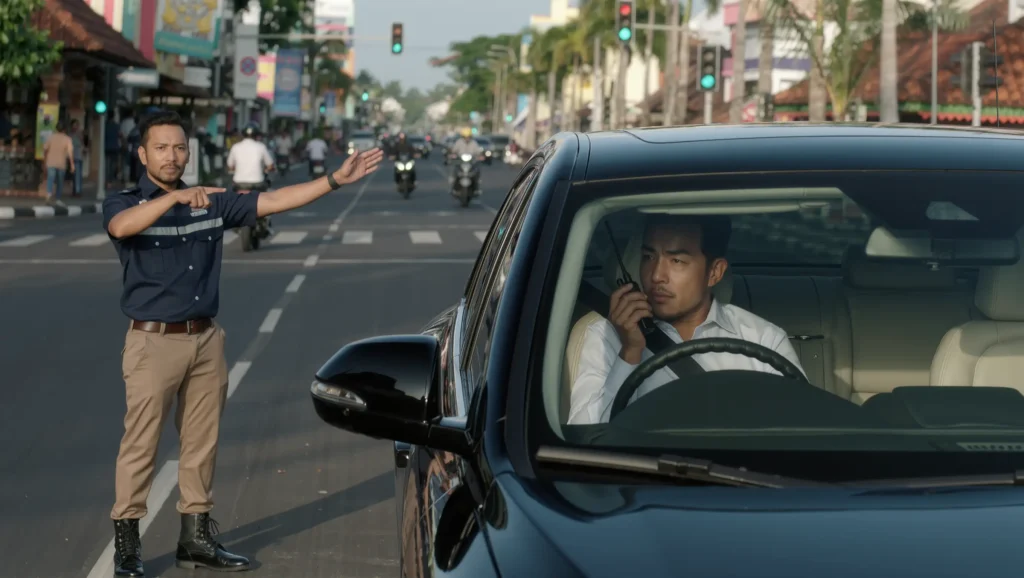
Although both aim to avoid traffic congestion, the need for physical traffic clearance can vary depending on the type of trip and how crucial punctuality is for the client. Trips with very tight schedules, such as VIP guests who must arrive on time for an official event, or large groups moving together to a single location, usually benefit the most from this service because the risk of delay can significantly impact the entire event.How Physical Traffic Clearance Works | Bali Premium Trip
Meanwhile, trips with more flexible timing, such as a relaxed vacation without a strict agenda, generally don’t require physical traffic clearance as much, since a delay of a few minutes won’t have a significant effect. Some types of trips show a more pronounced need for this service. VIP guests with an official agenda, for instance, need certainty over travel time so they aren’t late for an important event, while large groups such as business delegations or wedding parties often require extra coordination to keep all vehicles moving together toward the same location.
Similarly, organizers of large-scale events need physical traffic clearance to ensure that important guests can arrive according to the schedule that has been arranged. This differs from relaxed trips without a tight schedule, which generally don’t require this service since the main goal leans more toward comfort rather than time certainty.
Direct Comparison: Standard Travel vs Travel with Physical Traffic Clearance
Now that it’s clear how this service actually works, it’s easier to see its benefits concretely by comparing it directly with standard travel without physical traffic clearance, particularly in terms of reliable travel time, stress levels during the trip, and suitability for different needs.
| Aspect | Standard Travel | Travel with Physical Traffic Clearance |
| Travel Time Reliability | Hard to predict, depends on traffic conditions | More reliable thanks to on-the-ground coordination |
| Risk of Getting Stuck in Traffic | Fairly high, especially during peak hours | Minimized through route planning and a supporting team |
| Group Coordination | Depends on each individual driver | Coordinated so every vehicle moves together |
| Compliance with Traffic Laws | Standard, same as other road users | Still compliant, assisted by official coordination |
| Best Suited For | Relaxed trips with no strict schedule | VIP guests, large groups, or events with a critical schedule |
The comparison below is laid out to give you that overview at a glance, making it easier to decide whether you genuinely need this service for your trip in Bali. This table makes it clear that physical traffic clearance delivers the most value precisely in situations where reliable timing is genuinely the top priority.
Tips for Choosing the Right Physical Traffic Clearance Service
Choosing the right service provider can actually be simplified by considering a few key factors before booking. With a little research and preparation upfront, you can avoid choosing the wrong service, which could otherwise disrupt the smoothness of your trip.
Make Sure the Provider Conducts a Route Survey Before Departure Day
Effective physical traffic clearance requires thorough preparation, including identifying potential congestion points along the route to be taken, rather than simply relying on the driver’s on-the-ground experience. A route survey allows the team to know in advance the road conditions, peak hours, construction areas, and alternative routes that can be used if unexpected obstacles arise on departure day.
With this survey in place, the field team no longer works reactively, but already has scenarios and backup plans ready from the start. This is especially important for trips with tight arrival schedules, such as catching a flight or reaching an important event, since every minute of delay can significantly affect the entire schedule.
Ask How the Team Coordinates with Local Authorities
A professional service provider usually has a clear working relationship with local officers, ensuring that traffic arrangements are carried out according to regulations and don’t cause problems later on. This coordination is important so that every action taken to manage traffic flow, such as opening a priority lane or temporarily redirecting other vehicles, is done legally and doesn’t create friction with the local community or authorities.
Before choosing a service provider, it’s worth asking directly how this collaboration mechanism works, whether they hold official permits or formal partnerships, and how they handle sudden changes in field conditions. Transparency on this matter reflects how professional the service truly is.
Match the Scale of Service to the Size of Your Group
A large group with multiple vehicles requires more complex coordination than just one or two vehicles, so make sure the service provider can handle the scale of your trip. The more vehicles moving together, the higher the risk of the group getting separated along the way due to red lights, intersections, or unexpected traffic congestion.
Make sure the service provider has enough personnel and experience handling large groups, including strategies to keep all vehicles moving together without falling behind. Even for smaller groups, adjusting the scale of service still matters, so that what’s provided isn’t excessive or, conversely, insufficient.
Discuss the Schedule and Key Points from the Start
The more detailed the information you provide about your expected arrival time and the key points along the journey, the more thorough the preparation the field team can carry out. Details such as departure time, pick-up location, and specific locations that must be reached by a certain time will help the team design a more precise traffic management strategy.
Discussing this upfront also gives the service provider room to offer input, such as suggesting a more optimal departure time or flagging potential obstacles at certain points. This kind of two-way communication minimizes the risk of miscommunication that could affect the overall smoothness of the trip.
Choose a Service That Can Be Combined with Other Needs
Bali Premium Trip offers a physical traffic clearance service integrated with private car transfers and personal security escorts, so that your entire land journey in Bali, from guaranteed travel time to comfort inside the vehicle, can be handled in one comprehensive service package. With this integrated approach, you don’t need to worry about coordinating multiple different vendors for transportation and security needs that are, in fact, closely related.
An interconnected service also ensures every element of the trip works in sync, from drivers who understand priority routes, to the field team managing traffic flow, to security personnel ready to accompany you throughout the journey. The result is that you can focus more on enjoying your time in Bali without having to worry about the technical details behind the scenes.
By considering these points, you can make sure the physical traffic clearance service you choose genuinely helps your trip run smoothly, rather than being an extra cost with no clear benefit.
Read more: What Is a Close Protection Officer? Key Differences from a Regular Bodyguard
Keep Your Journey Running Smoothly with Bali Premium Trip
Traffic in Bali can be a real challenge, especially for VIP guests or large groups who need to arrive on time for an important agenda. Physical traffic clearance helps ensure your ground travel runs more smoothly and predictably, without compromising safety or breaking applicable traffic laws.
Bali Premium Trip is ready to help arrange your land transportation with physical traffic clearance services integrated with private car transfers and security escorts, ensuring your entire agenda in Bali runs on schedule. Contact our team now for a consultation and plan your trip without worrying about delays.
Related Article

Renting a Luxury Car in Bali for Christmas and New Year: A Guide to Choosing and Booking
Christmas and New Year is one of the busiest periods...
Christmas and New Year is one of the busiest periods in Bali. Travelers arrive to celebrate the year-end holidays, roads...
Is Bali Airport Fast Track Worth It During Christmas and New Year?
Late December to early January is one of the busiest...
Late December to early January is one of the busiest times of year in Bali. Domestic and international travelers arrive...

Bali Airport Departure Guide for International Travelers: Everything You Need to Know!
A Bali Airport Departure Guide for International Travelers is essential...
A Bali Airport Departure Guide for International Travelers is essential for anyone who wants to fly home without rushing, waiting...