
Get to Know Ogoh Ogoh Bali: History, Meaning, and Its Connection to Nyepi

oktarina
January 26, 2026
10 min read
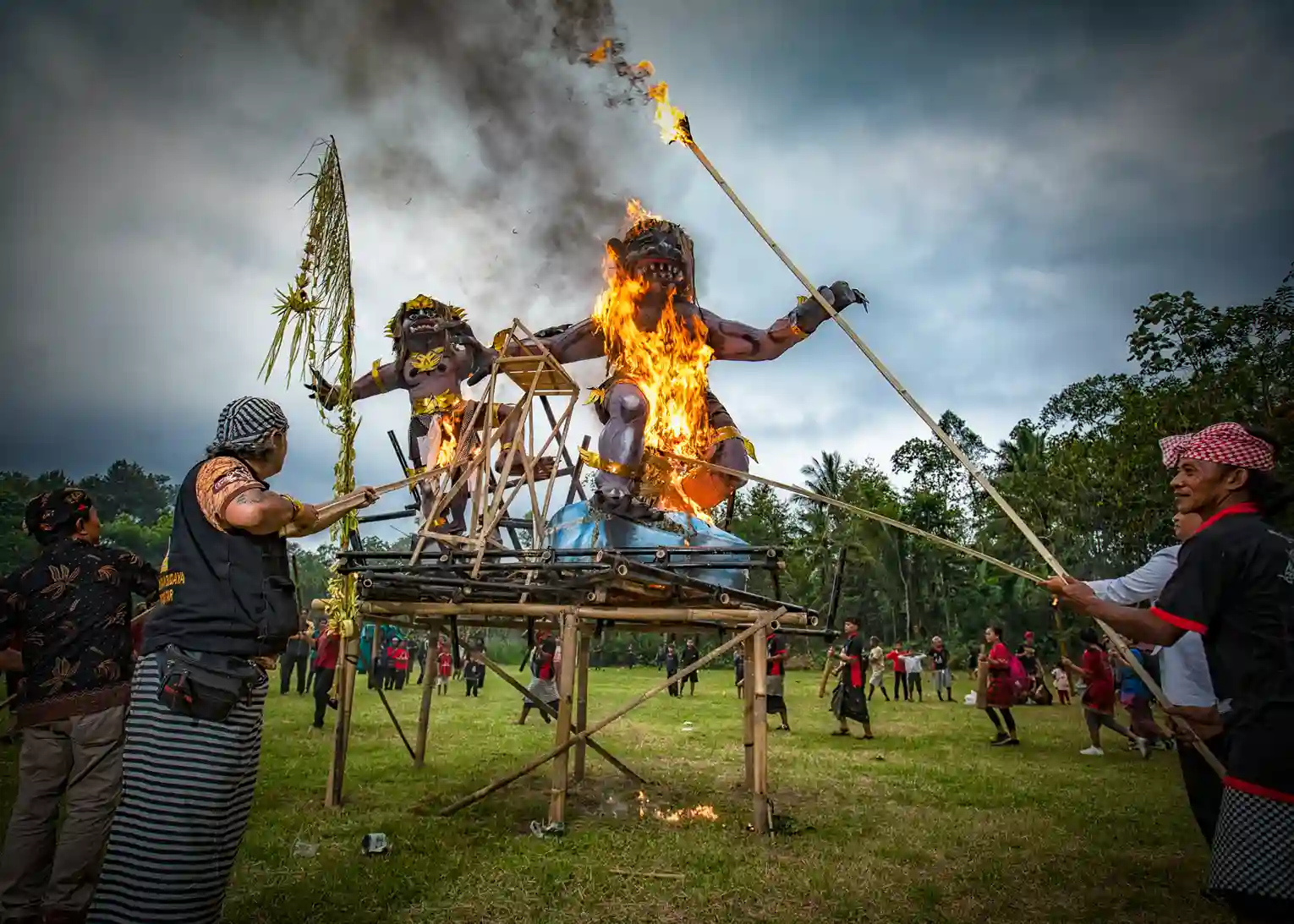
Ogoh ogoh is an important part of Balinese tradition and always appears before Nyepi Day. If you visit Bali during this period, ogoh ogoh is often the first cultural experience that leaves a strong impression. These giant statues with fierce expressions are not just a public show. They represent a process of self cleansing before entering the sacred day of Nyepi. Through this article, you will get to know ogoh ogoh Bali in a more complete way, starting from its definition, history, and meaning in Balinese daily life. So make sure you read until the end.
Key Takeaways
- Get to Know Ogoh Ogoh Bali as a Symbol of Self Cleansing
Ogoh ogoh is a giant statue that represents negative energy such as anger and greed. It is paraded on the night before Nyepi as a symbol of driving away bad traits before entering a sacred day filled with silence. - A Tradition Rooted in Spirituality and Creativity
Although considered relatively new, ogoh ogoh is deeply connected to Hindu Balinese spiritual values. Over time, it has grown into a form of artistic and cultural expression that involves local communities, especially young people. - Watching Ogoh Ogoh: Time, Places, and Tips
You can watch ogoh ogoh parades in many parts of Bali such as Denpasar, Ubud, and Kuta. Arrive early, respect local customs, and consider services like Bali Premium Trip to enjoy a smoother and more organized experience.
Get to Know Ogoh Ogoh Bali
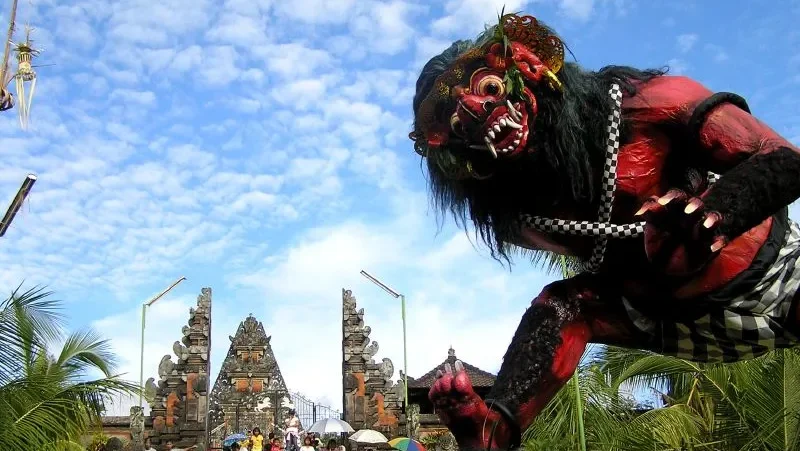
Ogoh ogoh Bali is a large statue created as part of the Nyepi celebration in Bali. These statues usually take the form of scary figures such as giants, mythological characters, or representations of bad human traits that disturb balance in life. From their appearance alone, you can clearly see that ogoh ogoh is not meant to look beautiful. It is designed to represent the dark side that exists in nature and within humans.
From a technical point of view, ogoh ogoh is built using a bamboo frame so it stays strong but light. The frame is then shaped and covered with materials like styrofoam, paper, and fabric. Light materials are used for a reason. Ogoh ogoh must be easy to lift and carry together during the parade, because the procession itself is a key part of the ritual. In many villages, the making of ogoh ogoh involves local youth and can take weeks or even months.
In Balinese tradition, ogoh ogoh is not created to be kept or displayed for a long time. The statue exists only temporarily, then it is paraded around the village on the night before Nyepi. After that, ogoh ogoh is destroyed, usually by burning it. This act symbolizes the removal of negative energy and bad desires that have been given physical form. From here, you can see that ogoh ogoh is not just an art object, but an important part of a religious ritual.
The presence of ogoh ogoh also reflects how Balinese people view balance in life. Negative energy is not ignored. It is acknowledged, shown, and then released. Through this process, people prepare themselves to enter Nyepi in a cleaner, calmer, and more balanced state.
History of Ogoh Ogoh Bali
The history of ogoh ogoh Bali is closely linked to the development of Nyepi celebrations in Bali. This tradition became widely known in the 1980s, especially around 1983 to 1984. Compared to other Balinese rituals that have existed for centuries, ogoh ogoh is relatively new. However, the values behind it come from older concepts about balance between humans, nature, and unseen forces.
Ogoh ogoh represents Bhuta Kala, which refers to negative energy believed to come from bad human traits such as anger, greed, and uncontrolled desire. These giant statues are paraded on Pangrupukan night, one day before Nyepi. The purpose of this procession is to bring out and neutralize negative energy so it does not disturb life during the day of silence. This shows that ogoh ogoh is not just entertainment, but part of a spiritual process.
Linguistically, the term ogoh ogoh is believed to come from the Balinese word ogah ogah, which means to shake or move something back and forth. This refers to the way the statue is carried and moved during the parade. The movements are believed to attract the attention of Bhuta Kala before it is finally removed.
If traced further back, the early form of ogoh ogoh was inspired by traditions such as Barong Landung and Ndong Nding, as well as lelakut, simple scarecrow like figures used in rice fields to scare birds away. Before the term ogoh ogoh became common, these giant forms were known as onggokan. Over time, their shapes became more expressive and detailed.
The growth of ogoh ogoh became faster after Nyepi was declared a national public holiday. Creativity among youth groups increased, and ogoh ogoh became a medium for artistic expression. In 1990, ogoh ogoh was introduced at the Bali Arts Festival, marking its recognition as an important and living part of Balinese culture.
The Philosophical Meaning of Ogoh Ogoh
Behind the scary appearance of ogoh ogoh lies a meaning that is very close to human life. Ogoh ogoh represents Bhuta Kala, the negative energy believed to exist in nature and within every person. The giant figure with an angry face and exaggerated movements is not meant to scare people, but to show the dark side that often appears without being noticed.
This negative energy shows up in simple and familiar ways. Uncontrolled anger, jealousy, greed, and an oversized ego are things you can easily find around you, or even within yourself. Ogoh ogoh acts as a mirror that invites people to look inward, not to judge, but to become aware.
The act of parading ogoh ogoh carries deeper meaning than a cultural show. When the statue is carried together and moved through village streets, people are invited to bring negative energy into the open. By doing this, the dark side is acknowledged. Awareness is important, because change can only begin when someone is willing to recognize their weaknesses.
The final stage, the destruction of ogoh ogoh, delivers a strong message. It symbolizes the effort to let go of bad traits that have already been recognized. This does not mean humans become perfect, but it shows an intention to reset thoughts and behavior. Through this process, you are reminded that Nyepi is not only about outer silence, but also inner calm and maintaining balance in life in Bali.
Read more: Understanding Nyepi Day in Bali: What You Need to Know!
The Connection Between Ogoh Ogoh and Nyepi
Ogoh ogoh has a close and inseparable connection with Nyepi Day in Bali. The statue is always paraded on the night before Nyepi, known as Pangrupukan night. On this night, the atmosphere of Bali changes completely. Streets are filled with gamelan music and villagers carrying ogoh ogoh around their neighborhoods.
Pangrupukan night marks the final stage before entering the day of silence. The parade aims to drive away and neutralize negative energy believed to exist around human life. Ogoh ogoh is shaken and rotated at road intersections, symbolizing the effort to confuse and expel bad energy so it does not stay. The noise and excitement are not just for fun, but part of a spiritual process shared by the community.
After the parade ends, ogoh ogoh is usually destroyed. This act represents the release of bad traits and negative energy that were embodied in the statue. From this point, people prepare themselves to enter Nyepi with a cleaner state of mind.
The next day, Bali enters Nyepi. For 24 hours, all activities stop. Lights are turned off, travel is not allowed, and the island becomes silent. The shift from a noisy night to a quiet day reflects the concept of balance that is deeply respected in Balinese culture. Through this sequence, you are invited to understand that Nyepi is not just about staying still, but about resetting thoughts, attitudes, and the relationship with nature.
Where to Watch Ogoh Ogoh in Bali
You can watch ogoh ogoh almost everywhere in Bali, as each banjar usually parades its own statue. Many locations become meeting points for several parades, allowing you to see different ogoh ogoh designs in one night. Here are some of the most popular places.
- Denpasar
Denpasar is one of the main centers of celebration. You can watch ogoh ogoh around Catur Muka Statue, Plaza Renon, Jalan Cok Agung Tresna, and Simpang Enam Teuku Umar. These areas are busy because many banjar parades meet at the same spots. - Badung, Kuta, and Legian
In Badung, the atmosphere is very lively. Popular spots include Ground Zero Kuta, Jalan Raya Legian, and the Kuta Beach area. Many visitors choose these locations because they are easy to access and offer a wide variety of ogoh ogoh. - South Bali
In South Bali, the ITDC Nusa Dua intersection is a favorite viewing point. The area is spacious and well organized, making it more comfortable for spectators. - Gianyar
In Gianyar, you can watch ogoh ogoh in Ubud, especially around Puri Ubud and the Arjuna statue on Jalan Raya Andong. The atmosphere feels closer and more rooted in village life. - Bangli
In Bangli, the town square becomes the main parade area. This location is suitable if you want to see a simpler and more local celebration. - Tabanan
In Tabanan, parades usually take place along Jalan Pahlawan, Jalan Gajah Mada, and Taman Kota, with active participation from surrounding banjar.
Tips for Watching Ogoh Ogoh in Bali
To enjoy the ogoh ogoh experience comfortably, there are a few practical things you should keep in mind. The celebration involves large crowds and takes place in public spaces, so small preparations can make a big difference.
- Arrive early to get a better viewing position and avoid being stuck in the middle of the crowd.
- Wear comfortable clothing suitable for walking and standing for long periods, but stay respectful of local customs.
- Bring a camera or phone with a full battery, as the parade can last well into the night.
- Follow local rules and instructions from pecalang or local officers. Do not block the parade route.
- Avoid touching ogoh ogoh without permission, as it is part of a sacred ritual.
- Pay attention to road closures and plan your route in advance.
- For a smoother and stress free experience, you can use concierge services in Bali from Bali Premium Trip to help arrange transport, choose strategic viewing spots, and manage your schedule.
Read more: What Are The Activities That Tourists Can Do During Nyepi in Bali? Check Here!
Plan Your Bali Trip with Bali Premium Trip
If you plan to experience Nyepi in Bali, getting to know ogoh ogoh Bali is essential. Ogoh ogoh is not just a cultural parade, but part of a ritual that marks the transition from noise to silence. By understanding its meaning and schedule, you can better appreciate Nyepi and adjust your travel plans.
To keep your trip comfortable, consider using concierge services in Bali from Bali Premium Trip. These services help you plan everything from transport before and after Nyepi, recommendations for the best ogoh ogoh viewing spots, to adjusting your stay during the day of silence. With proper support, you can enjoy the cultural experience without dealing with confusing logistics.
If you want to enjoy Bali in a calm, organized way, especially during an important moment like Nyepi, now is the right time to plan. Contact Bali Premium Trip and share your travel plans to create a memorable Bali experience.

Related Article

Corporate VIP Services in Bali 2026: An Exclusive Experience for Business Travel
Bali is not only known as a tourist paradise but...
Bali is not only known as a tourist paradise but also as a growing destination for business trips. In 2026,...

Is There a Security Escort for Solo Female Wellness Travelers in Bali? Find Out Here!
Bali, with its stunning natural beauty and wellness activities, is...
Bali, with its stunning natural beauty and wellness activities, is a dream destination for many, especially solo female travelers who...

Expat Concierge Package: A Practical Solution for Relocating to Bali
Relocating to Bali is a popular choice for many people...
Relocating to Bali is a popular choice for many people who want to start a new life on this beautiful...